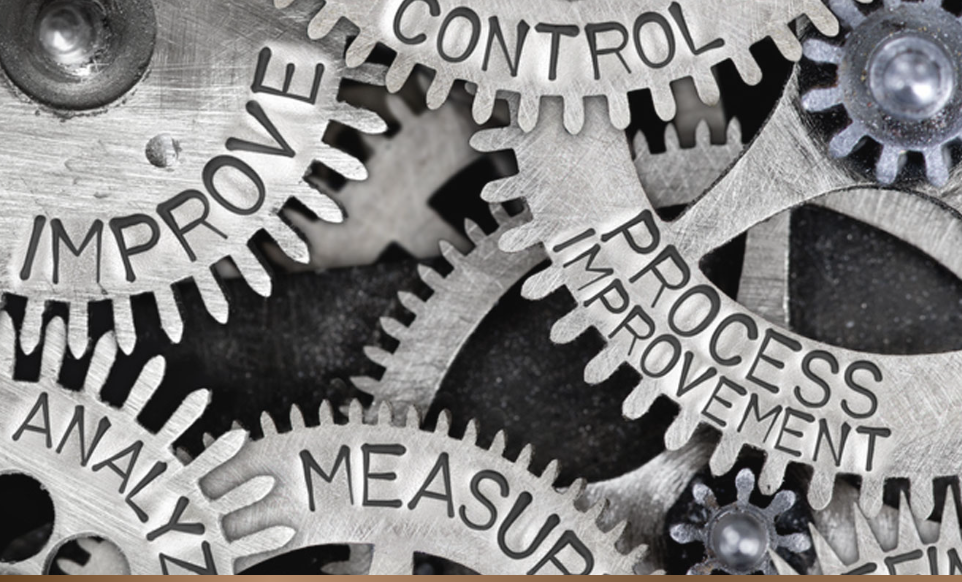
Here are some key ways a business organization can identify and validate its requirements for adopting a new automation solution:
Gather input from business units on current manual processes and pain points. Look for repetitive, high-volume tasks that are tedious and consume employee time. These are good automation candidates.
Map out end-to-end workflows and quantify the amount of manual effort involved. Estimate potential time and cost savings from automation.
Identify opportunities to improve efficiency, speed, accuracy, and consistency through automation. Are there process bottlenecks or high error rates that could benefit?
Evaluate how much institutional knowledge is required for key processes. Could automation help retain this knowledge and minimize disruption when employees leave?
Consider the impacts of automation on roles, responsibilities, and skills. Will automation allow the reallocation of talent to more high-value work?
Analyze current tools and infrastructure. Do they provide APIs, integration points, and data access needed for automation?
Build financial justification estimating hard cost savings and productivity gains over time from deploying automation.
Interview employees at various levels to build buy-in and get their ideas on automation opportunities.
Documenting automation needs, objectives, and projected benefits will help justify investment and guide technology selection and implementation planning. This upfront analysis is critical for any successful automation initiative.
Automating business processes can be a game-changing move for organizations. It can drive operational efficiency, improve customer satisfaction, and free up employees to focus on strategic, value-added activities. Here's how businesses should go about automating their processes:
Initial Assessment and Planning:
Identify Bottlenecks: Conduct a thorough analysis to identify workflow bottlenecks and inefficiencies that could benefit from automation.
Consult Stakeholders: Engage with team members and departments affected by the automated processes to understand their requirements and concerns.
Define Objectives: Clearly define what you aim to achieve with automation. Is it cost reduction, time-saving, error minimization, or all of these?
Tool and Technology Selection
Technology Scouting: Choose the right automation tools that align with your needs. This could range from simple task automation tools to complex Business Process Automation (BPA) systems or AI-driven solutions such as IBM Process mining or IBM Watson orchestrate.
Compatibility Check: Ensure the chosen technology is compatible with existing systems and scalable for future requirements.
Development and Integration
Pilot Testing: Before a full-scale rollout, a pilot test should be carried out to identify any issues or improvements needed.
Integration: Integrate the automation tools with existing systems, ensuring seamless and secure data flow.
Customization: Customize the tool to suit your specific processes, roles, and outcomes.
Employee Training
Training: Equip employees with the skills to work alongside automated processes and troubleshoot fundamental issues.
Implementation and Monitoring
Roll-out: Implement the automation strategy, closely monitoring its initial impact and adjusting as needed.
KPI Tracking: Establish KPIs to continuously monitor the effectiveness of the automated processes.
Iterative Improvement
Regular Updates: Keep the system updated to benefit from the latest features and security protocols.
Feedback Loop: Establish a feedback mechanism where employees can report issues or suggest improvements.
Adapt and Update: Regularly review performance metrics and make iterative changes to adapt to new challenges or opportunities.
Scale and Expand
Scale: Once a process is automated and optimized, look for other areas within the organization where similar strategies can be implemented.
Cross-Departmental Collaboration: Encourage departments to share their automation success stories and best practices.
By taking a comprehensive, step-by-step approach, businesses can automate their processes to bring about transformational changes.
AI business automation can benefit procure-to-pay and payment processing in several key ways:
A company with an accounts payable balance of $100 million that takes advantage of a 1% early payment discount would save $1 million annually. So, the savings for discount optimization are significant, even for businesses with large accounts payable balances.
Negotiate better terms with suppliers.
Set up a tracking system for tracking discounts. This will help businesses ensure they take advantage of all available discounts.
Automated invoice processing - AI can extract critical details from invoices like amounts, dates, PO numbers, etc. This reduces manual data entry and speeds up the processing and payment of invoices.
Predictive analytics - AI can forecast future cash flow needs by analyzing historical data and patterns. This allows better planning to ensure sufficient funds are available.
Contract analysis - AI can scan contracts to identify terms like payment due dates, early payment discounts, and volume-based rebates. It can then optimize expenses or surface rebate opportunities.
Anomaly detection - Machine learning algorithms can detect abnormal invoice patterns like duplicate payments or fraudulent changes to vendor details. This increases compliance.
Dynamic discounting - AI tools can negotiate short-term discounts with suppliers based on cash flow availability. This generates working capital for buyers.
Automated approval workflows - Invoice and payment details can be automatically routed to approvers based on spend thresholds and policies, avoiding bottlenecks.
Vendor portal - Suppliers can directly upload invoices and track status, enabling touchless procure-to-pay. AI bots can handle vendor inquiries.
Technology solutions like IBM Process Mining are one that every organization must have if they want to invest safely to make significant improvements in departments such as P2P, AP, AR, HR, Marketing, etc. The ROI is guaranteed, and the payback period is really short.
AI delivers increased process efficiency, insights, visibility, control, and cost savings across the procure-to-pay process from POs to payments and reconciliation. It's a vital tool for optimizing cash flow and working capital.
By improving cash flow, businesses can increase their financial flexibility and make better financial decisions.
The future of business Automation is bright. The increasing adoption of artificial intelligence (AI), machine learning (ML), and other advanced technologies is making it possible to automate more and more processes, from customer service to supply chain management.
Here are some
of the key trends that are shaping the future of business automation:
Hyperautomation: This uses multiple Automation technologies, such as RPA, AI, and ML, to automate end-to-end processes. Hyperautomation can help organizations achieve significant efficiency gains and improve their decision-making capabilities.
Robotic Process Automation (RPA): This technology uses software robots to automate repetitive tasks. RPA is a low-cost and easy-to-implement automation solution that can be used to automate a wide variety of functions.
Artificial intelligence (AI): AI is a powerful technology that can automate tasks that require human intelligence, such as decision-making and customer service. AI is still in its early stages of development, but it can potentially revolutionize how businesses operate.
Machine learning (ML): ML is an AI that allows software to learn and improve over time. ML can automate tasks requiring pattern recognition and prediction, such as fraud detection and risk assessment.
The cloud: The cloud is a computing platform that allows businesses to access applications and data over the internet. The cloud makes it easier for companies to automate their processes, as they do not need to invest in hardware and software.
These are just a few of the key trends that are shaping the future of business Automation. As these technologies continue to develop, we can expect to see even more automation in the years to come.
Here are some specific examples of how business Automation is being used today:
In customer service, chatbots are used to answer customer questions and resolve issues.
In finance, RPA automates tasks such as processing invoices and managing payments.
In manufacturing, AI is used to optimize production processes and improve quality control.
In healthcare, ML is being used to diagnose diseases and develop personalized treatment plans.
These are just a few examples of how business Automation is being used today. As the technology continues to develop, we can expect to see even more automation in the years to come.
The main benefit for business organizations to add AI to their current Automation processes is improved efficiency and accuracy. AI can automate tasks that are currently done by humans, but that are repetitive, time-consuming, or error-prone. This can free up human employees to focus on more strategic and creative tasks, and it can also help to improve the accuracy of processes.
For example, AI can be used to automate tasks such as:
Processing invoices
Scheduling appointments
Answering customer questions
Detecting fraud
Optimizing production processes
Developing personalized marketing campaigns
By automating these tasks, AI can help businesses save time and money, improve customer service, and increase their bottom line.
Here are some other benefits of adding AI to Automation processes:
Increased productivity: AI can help businesses to automate tasks that are currently done manually, which can free up employees to focus on more productive activities.
Improved decision-making: AI can help businesses to make better decisions by analyzing data and identifying patterns.
Enhanced customer experience: AI can provide customers a more personalized and efficient experience.
Reduced risk: AI can help businesses to identify and mitigate risks, such as fraud and security threats.
Adding AI to Automation processes can provide businesses with several benefits, including improved efficiency, accuracy, productivity, decision-making, customer experience, and risk reduction.
In addition to the benefits mentioned above, AI can also help businesses to:
Gain insights from data: AI can analyze large amounts of data to identify patterns and trends that would be difficult to find manually. This information can be used to make better decisions about business operations.
Innovate new products and services: AI can be used to develop new products and services that meet customers' needs. For example, AI can be used to personalize product or service recommendations or create new marketing campaigns.
Stay ahead of the competition: AI is a rapidly evolving technology, and businesses that adopt AI early can gain a competitive advantage. By automating tasks and gaining insights from data, companies can improve their efficiency and productivity and develop new products and ervices that meet customers' needs.
/
The future of business Automation is bright. Businesses can improve their efficiency, accuracy, and profitability by automating their processes. They can also free employees to focus on more strategic and creative tasks.